Pride ~ Quality ~ Precision


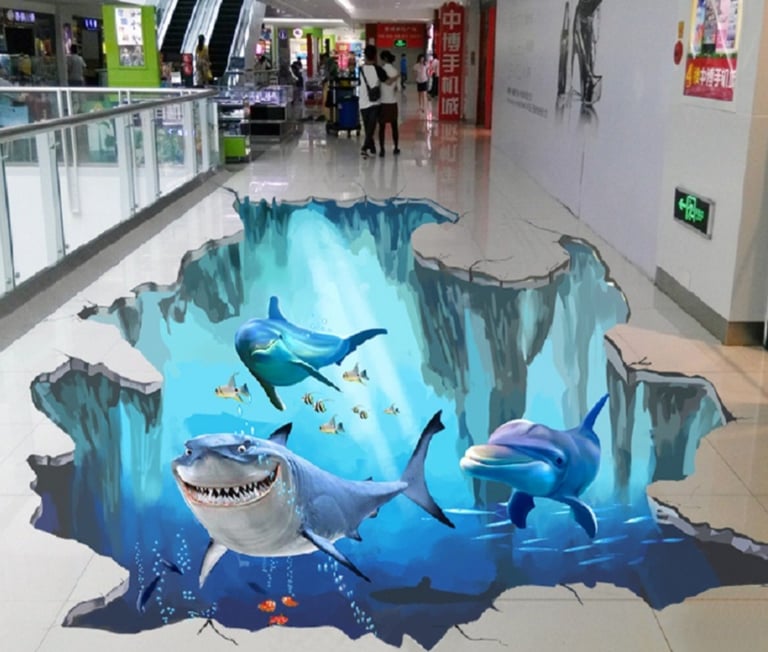
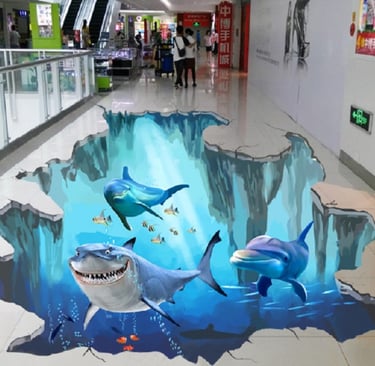




A 3D resin floor is a customized, multilayered floor coating that creates a three-dimensional visual effect, typically achieved using a printed image sealed with a transparent epoxy or polyurethane resin. It is prized for its visual impact and durability, making it suitable for both homes and high-traffic commercial spaces.
How 3D resin floors are made
The installation of a 3D resin floor is a multi-step process that requires professional skill for a high-quality finish.
Preparation of the substrate: The underlying surface, usually concrete, must be completely smooth, flat, and clean. Any cracks or imperfections are filled, and the floor is sanded to ensure proper resin adhesion. The surface must also be completely dry to prevent bubbling or lifting.
Application of a primer: A self-leveling epoxy primer is applied to prepare the surface for the 3D mural.
Installation of the 3D image: The high-resolution, custom-printed mural or image is installed on the prepared surface, taking great care to avoid any wrinkles or creases.
Application of the clear coat: A transparent, two-component epoxy or polyurethane resin is mixed and then poured over the 3D image. Multiple coats may be applied to achieve the desired depth.
Curing and sealing: After the resin is applied, a heat gun or torch is used to remove any air bubbles. A protective varnish or topcoat may be added as a final layer for added durability. The full curing process can take several days.
Maintenance tips
Proper cleaning and maintenance are key to preserving the appearance and longevity of a 3D resin floor.
Daily cleaning: Use a soft-bristle broom or vacuum to remove dirt and grit that could scratch the surface.
Weekly cleaning: Mop the floor with a soft mop and a pH-neutral, non-abrasive cleaner diluted in warm water.
Clean spills immediately: Wipe up any spills, especially of harsh chemicals, as soon as possible.
Avoid harsh cleaners: Do not use abrasive cleaners, bleach, or acidic solutions, which can damage the resin.
Repair minor damage: Repair kits are available for minor cracks or chips. For more severe damage, consult a professional installer.
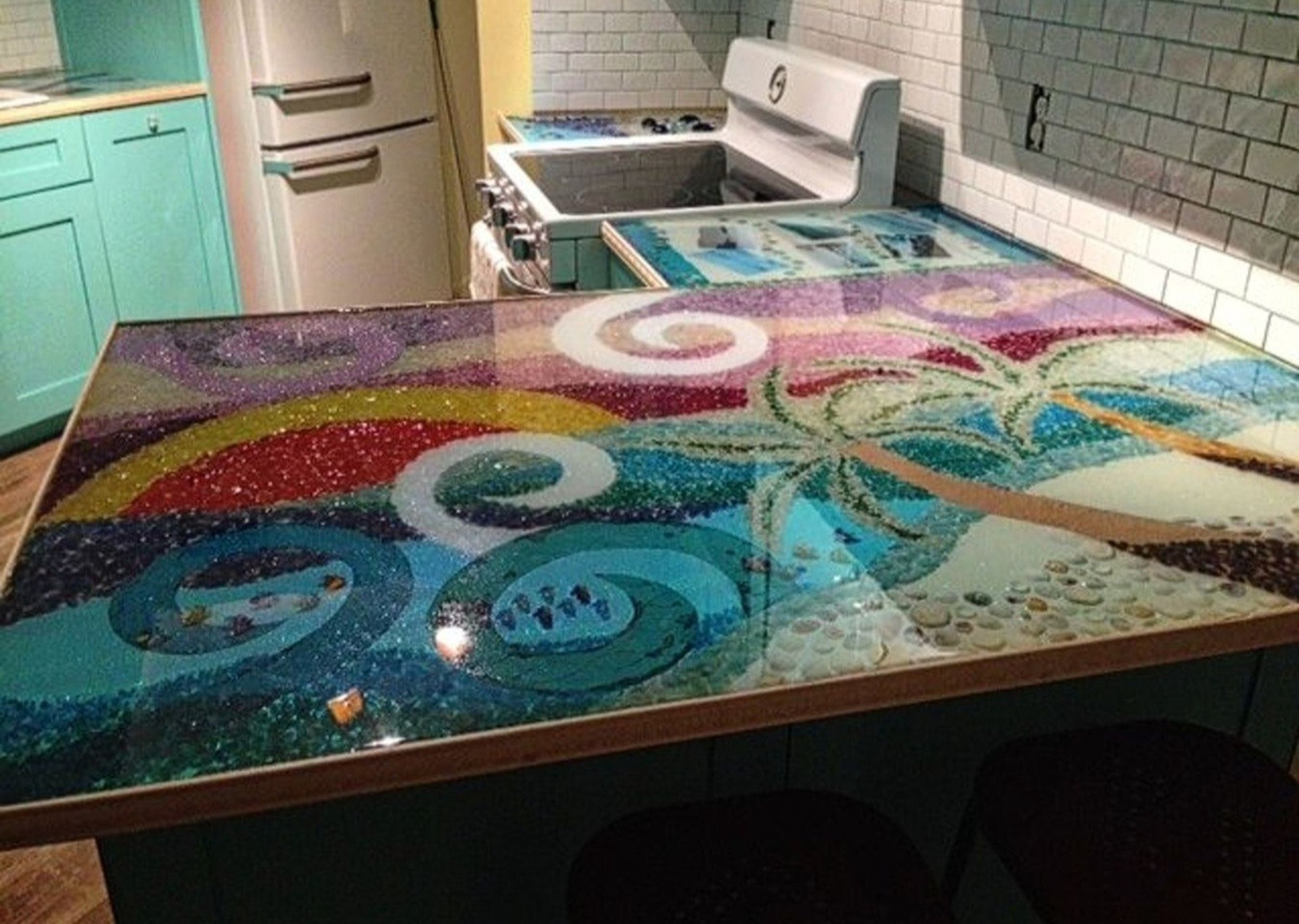
RESIN WORK TOPS
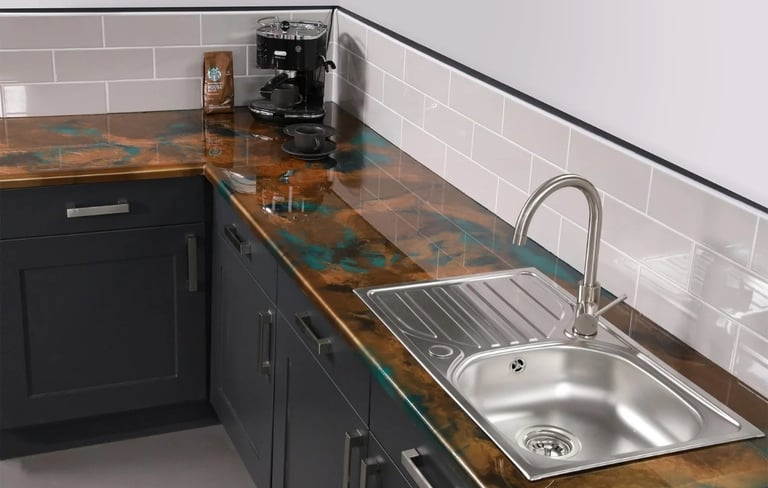
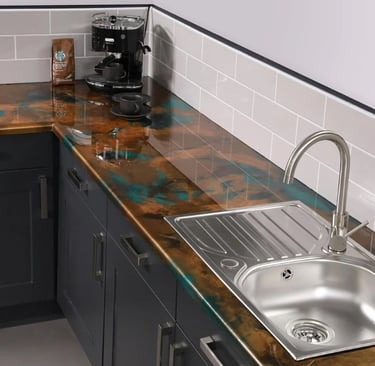
A resin worktop is a solid surface made from a blend of resin, minerals, and pigments that can be customized to achieve a variety of looks, including faux stone or wood. The most common types are acrylic resin, epoxy resin, and phenolic resin. They are praised for their seamless appearance, non-porous and hygienic surface, and durability.
Types of resin worktops
Acrylic resin
Acrylic resin worktops are known for their exceptional malleability when heated, allowing them to be thermoformed into complex shapes without compromising structural integrity. The seams can be virtually invisible, creating a sleek, continuous look.
Epoxy resin
Epoxy resin is a durable and tough material that can be used to create thick, high-gloss worktops that mimic natural stone at a lower cost. It is also available as a coating for existing worktops.
Phenolic resin
Primarily used in commercial and laboratory settings, phenolic resin worktops are made from paper or wood fibers bonded with resin.
RESEARCH INTO A MORE SUSTAINABLE RESIN FORMULA
REPORT HERE
The future of resin floors is increasingly sustainable, focusing on bio-based materials, recyclability, and circular economy principles, with manufacturers adopting lower-VOC formulations, energy-efficient production, and closed-loop systems. The market is growing, driven by consumer demand for environmentally friendly options and regulatory pressure, leading to innovations like recycled content, durability, low maintenance, and end-of-life recycling or overcoating of existing floors.
Key Trends in Sustainable Resin Floors
Sustainable Materials:
There is a growing trend toward using bio-based resins derived from renewable resources and incorporating recycled materials into formulations.
Circular Economy:
Advancements in technology allow for the recycling of resin flooring at the end of its life to be used as aggregate for new products, promoting a closed-loop system that minimizes waste.
Low-VOC Formulations:
Manufacturers are developing solvent-free and low-VOC (volatile organic compound) resin systems to improve indoor air quality and reduce harmful emissions during installation and use.
Durability and Longevity:
Resin floors are inherently durable and long-lasting, meaning they don't need to be replaced as often, which reduces overall resource consumption and waste.
Damaged resin floors can often be patch-repaired, and entire systems can be overcoated with a new design without the need for complete removal and landfill disposal.
Energy-Efficient Production:
Manufacturers are optimizing their production processes to reduce energy consumption and are increasingly investing in sustainable factories with features like geothermal heating and sensor-controlled environments.
Drivers of Sustainability in the Resin Flooring Industry
Corporate Responsibility:
Businesses are increasingly prioritizing sustainability to reduce their carbon footprint and align with corporate responsibility goals.
Consumer Demand:
Homeowners and businesses are increasingly conscious of environmental impact and actively seek out sustainable and eco-friendly products and practices.
Regulatory Pressures:
Growing regulations and standards are compelling manufacturers to integrate Environmental, Social, and Governance (ESG) data into their strategic decision-making and product development.
Industry Initiatives:
Associations like FeRFA are developing sustainability policies to ensure members comply with regulations, promote responsible sourcing, and encourage recycling.
How to Identify a Sustainable Option
Look for manufacturers that have a focus on sustainable production and products, such as those with CO2-neutral factories or those that participate in programs like BREEAM for sustainable buildings.
Seek out products that are low-VOC, solvent-free, and made with recycled or bio-based content.
Verify if the product can be repaired, renewed, or recycled at the end of its lifespan to promote a circular economy.
GET IN TOUCH